

FLC500 Wavy vs Flat Shaker Screens: Which Should You Choose?
Sep. 18, 2026
Share
Choosing between FLC500 wavy replacement screens and flat shaker screens is mainly a question of capacity, separation quality, operating conditions, and replacement cost. A wavy screen may increase usable screening area and improve fluid distribution, while a flat screen often offers predictable performance, simple handling, and lower replacement risk.
Yuanpeng supplies replacement screens for FLC500 shale shakers in configurations designed for different drilling fluids and solids-control requirements. Before selecting a panel, compare the screen profile, mesh or API designation, tensioning method, sealing condition, expected service life, and compatibility with the installed shaker deck.
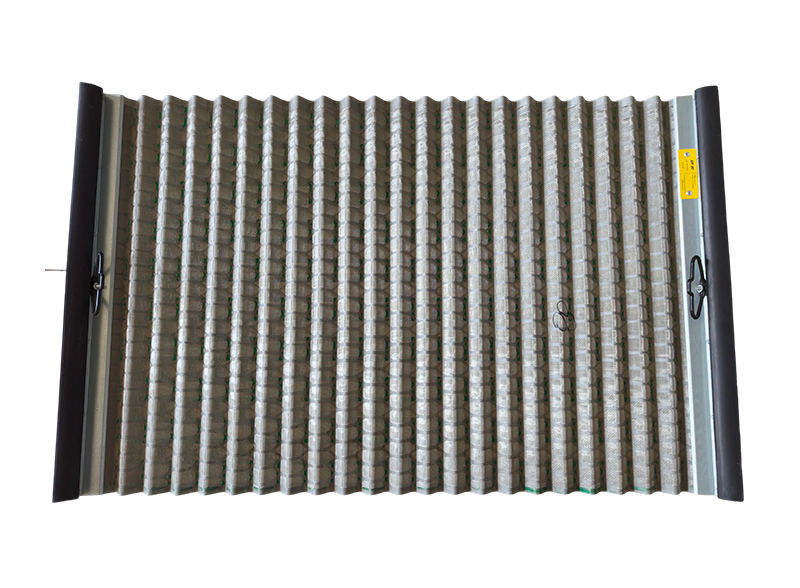
A wavy FLC500 screen has a shaped screening surface rather than a completely level panel. The formed profile can create additional working area within the same shaker footprint. It may also spread drilling fluid across the panel and reduce the tendency for fluid to travel through only one flow path.
In practical operation, the wavy profile can be useful when the shaker must process a high fluid volume or when the available deck length is limited. The design does not automatically guarantee finer separation, however. Cut point still depends on the opening size, wire condition, fluid rheology, vibration settings, deck angle, and solids loading.
A flat FLC500 screen uses a level screening surface supported by the panel frame. Its operating behavior is easier to predict because the fluid bed moves across a uniform plane. This makes flat panels a familiar choice for crews that prioritize simple installation, consistent maintenance, and easy comparison with previous screen performance.
Flat screens may be suitable for stable drilling conditions, moderate flow rates, and applications where screen replacement must be completed quickly. Their simpler shape can also make visual inspection and storage easier.
FLC500 replacement screens should not be selected by appearance alone. Two panels may look similar but differ in frame dimensions, hook location, tensioning arrangement, support spacing, or sealing profile. Confirm the original equipment configuration and the actual panel installed on the shaker before purchasing.
| Parameter | FLC500 wavy screen | FLC500 flat screen | Purchasing consideration |
|---|---|---|---|
| Screen profile | Formed or corrugated working surface | Level working surface | Choose the profile approved for the shaker deck and operating method |
| Typical panel footprint | Must match the existing FLC500 deck | Must match the existing FLC500 deck | Verify length, width, frame thickness, and corner geometry |
| Separation opening | Available in different mesh or API classifications | Available in different mesh or API classifications | Select according to required solids removal, not profile alone |
| Effective screening area | May be higher because of the formed surface | Usually limited to the flat projected area | Useful for high flow rate or limited deck space |
| Fluid distribution | Can improve distribution when correctly installed | Stable and predictable on a level deck | Evaluate actual flow pattern during commissioning |
| Installation difficulty | Requires correct orientation and seating | Usually easier to position and inspect | Important when screen changes occur under time pressure |
| Wear inspection | Inspect the formed areas, support points, and bonding | Inspect the flat surface, frame, bonding, and tension points | Use a documented inspection checklist |
| Maintenance risk | Incorrect seating can affect performance more noticeably | Incorrect tensioning can cause cracking or bypass | Follow the shaker manufacturer's installation procedure |
| Battery life | Not applicable because the screen has no battery | Not applicable because the screen has no battery | Evaluate service life, not battery duration |
| Best operating focus | Higher capacity and improved use of deck area | Stable operation, easy handling, and predictable maintenance | Match the screen to the drilling program and crew capability |
Mesh count alone does not fully describe screening performance. Wire diameter, opening size, weave type, pretension, and manufacturing tolerance all affect the actual cut point. When available, an API RP 13C designation provides a more useful reference for comparing the separation range of different screens.
Before purchasing, confirm the following details with the screen supplier:
In field use, the main benefit of a wavy screen is often observed as improved fluid distribution and greater use of the available screening surface. This can help reduce the amount of drilling fluid carried with discharged cuttings when the screen opening and shaker settings are correctly matched.
The result is not identical in every well. High-viscosity fluid, sticky clay, excessive flow, or an incorrect deck angle can fill the formed areas and reduce the expected benefit. A wavy panel should therefore be evaluated during actual operation rather than judged only by its shape.
Operators should monitor:
Flat screens are often easier for crews to troubleshoot because the fluid bed is visible across a uniform plane. If one panel performs differently, the crew can usually inspect the opening size, tension, frame condition, or deck support without accounting for a formed profile.
This predictable behavior can be valuable during frequent screen changes, temporary drilling locations, or operations where different crews share the same equipment. Flat screens may also be easier to compare with historical performance data from earlier wells.
However, a flat panel can become overloaded when the flow rate is too high for the available deck area. Excessive loading may cause premature blinding, fluid bypass, or rapid wear even when the screen itself is manufactured correctly.
Neither a wavy screen nor a flat screen contains a battery, so battery life is not an applicable purchasing parameter. The relevant field questions are operating life, wear resistance, bonding strength, resistance to blinding, and the time required for replacement.
Actual service life depends on:
A screen that lasts longer but lowers fluid recovery may cost more overall than a screen with a shorter life and better separation. Purchasing teams should calculate total operating cost using screen price, replacement labor, downtime, drilling fluid loss, disposal volume, and solids-control performance.
Wavy screens are usually considered when the operation needs more throughput from the existing FLC500 shaker or wants to improve fluid coverage across the deck. They can be especially useful when the drilling fluid is difficult to distribute evenly on a flat surface.
Advantages include:
Disadvantages include:
Flat screens are a practical choice when the operation values straightforward installation, familiar handling, and stable results. They are often preferred for routine drilling programs where flow rates remain within the normal capacity of the shaker.
Advantages include:
Disadvantages include:
Purchasing groups usually need more than a low unit price. They must control unplanned downtime, reduce replacement frequency, protect drilling fluid quality, and ensure that replacement parts arrive in the correct configuration.
The most common purchasing concerns include:
Yuanpeng can support a more controlled purchasing process by confirming the panel drawing, screen profile, opening specification, frame details, and deck position before production. This approach reduces the risk of comparing quotations that are not based on identical technical requirements.
Wavy FLC500 replacement screens are generally more suitable for purchasing groups that manage high flow rates, limited shaker deck area, or drilling fluids that need improved distribution. They are also worth evaluating when the existing shaker has available mechanical capacity but the current flat panels are becoming overloaded.
Wavy screens may be appropriate for:
Flat FLC500 replacement screens are generally more suitable for operations with stable flow rates, moderate solids loading, and a strong preference for simple maintenance. They are also a sensible starting point when the purchasing team lacks sufficient field data to justify a change in screen profile.
Flat screens may be appropriate for:
When both designs appear suitable, a controlled trial is more reliable than a general claim about capacity or service life. Install comparable wavy and flat panels on similar decks or during similar drilling intervals. Keep the opening specification as close as possible so that the profile is the main variable.
Record the following results:
This trial helps the purchasing group select the design that performs best in its own drilling fluid, crew, climate, and maintenance environment.
Choose FLC500 wavy replacement screens when the operation needs to increase usable screening area, handle a demanding flow rate, or improve fluid distribution across an existing deck. The choice is strongest when the shaker configuration supports the wavy profile and the crew can install and inspect it correctly.
Choose FLC500 flat replacement screens when the current process is stable, the flow rate is moderate, and easy handling is more important than additional effective area. Flat screens remain a dependable option when compatibility, quick replacement, and standardized inventory are the main purchasing objectives.
Neither design is universally better. The correct choice depends on the FLC500 deck, screen opening, drilling fluid, solids loading, operating cost, and maintenance capability. Yuanpeng can help purchasing teams compare the required specifications and select FLC500 wavy replacement screens or flat alternatives based on actual operating needs rather than appearance or unit price alone.
Related Products


