

What Are the Advantages of Brandt VSM300 Composite Frame Screens?
Sep. 16, 2026
Share
brandt vsm300 composite frame shaker screens help oilfield crews separate drilled solids from drilling fluid while reducing common problems such as screen damage, poor fit, and unplanned shaker downtime. A composite frame is lighter than a steel frame and can resist corrosion from water-based and oil-based drilling fluids. This guide explains how replacement screens for Brandt VSM300 shale shakers work, how to select the correct mesh, how to install them, and how to check performance using recognized solids-control methods.
For drilling contractors, the goal is not simply to buy a screen with the right outside dimensions. The screen must match the VSM300 basket, provide the required separation cut point, maintain a reliable seal, and survive vibration in the field. Correct selection can protect drilling-fluid properties, reduce dilution, and lower the risk of costly screen changes during a well section.
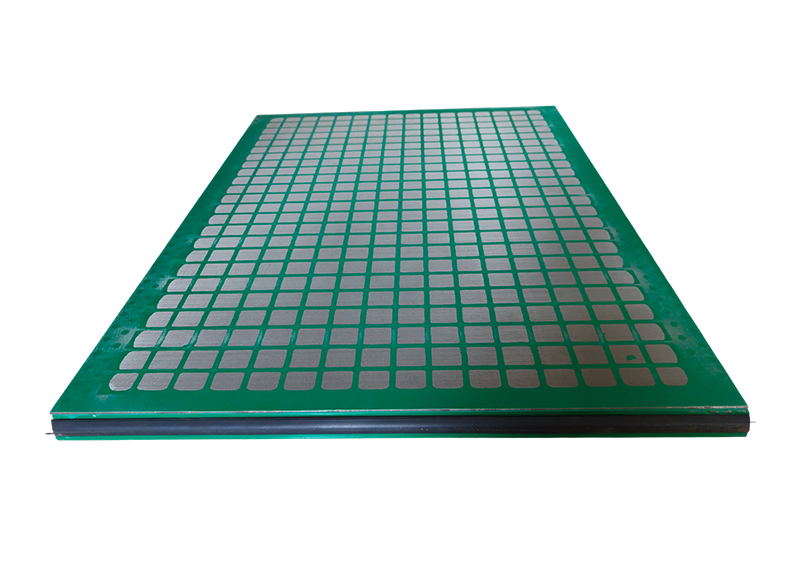
Brandt VSM300 composite frame shaker screens are replacement screen panels designed for use on compatible Brandt VSM300 shale-shaker equipment. The panel normally contains a woven wire cloth or multilayer screening surface, a supporting composite frame, and sealing or locking areas that hold the screen in the shaker deck.
In solids control, the screen is the first separation stage. Drilling fluid passes through the openings, while drilled cuttings remain on the screen surface and move toward the discharge end. The screen opening size, open area, fluid viscosity, flow rate, vibration, and cuttings loading all affect the final result.
API RP 13C provides a standard method for evaluating and labeling drilling-fluid screens. The American Petroleum Institute explains that this standard helps users compare screen products through measured conductance, separation information, and related performance data. However, an API label does not guarantee the same field capacity in every mud system. Actual results depend on equipment settings and drilling conditions.
A shale shaker removes large drilled solids before the fluid enters downstream equipment such as desanders, desilters, centrifuges, and mud cleaners. If the shaker screen is too coarse, more solids remain in the fluid. If it is too fine for the available flow and mud properties, the screen can blind, overload, or cause fluid to discharge with the cuttings.
Effective screening supports several operational goals:
The value of a screen should be measured with field data instead of broad claims. Useful measurements include screen life in operating hours, fluid loss in litres per tonne of cuttings, flow rate in gallons per minute, screen loading, motor current, and the percentage of solids removed. These figures allow a contractor to compare products under similar well and mud conditions.
Composite materials can weigh less than equivalent steel components. A lighter panel can make manual handling easier during screen changes. This matters when technicians must remove several panels on a vibrating deck in a limited work area.
Lower weight does not mean that every composite screen has the same lifting requirement or that lifting controls are unnecessary. Crew members should follow the shaker manufacturer’s safe-handling procedure and use mechanical assistance when the panel weight or working position requires it.
Steel can corrode when exposed to water, salts, oxygen, and chemical residues. Composite frames do not rust in the same way as carbon steel. This can be useful in marine drilling, high-salinity mud systems, and storage areas where screens are exposed to wash water.
Corrosion resistance does not make the entire screen immune to chemical or mechanical damage. The wire cloth, bonding areas, seals, and locking points still require inspection after every run.
A rigid frame helps maintain contact between the panel and the shaker deck. Stable contact reduces movement and helps prevent bypass around the screen edge. If the cloth is not supported correctly, vibration can create local stress and cause premature cracking or tearing.
Composite replacement panels can be used when an existing screen has torn wire cloth, damaged seals, bent supports, or visible frame wear. The replacement must match the correct deck position and locking system. A panel that appears similar but does not lock correctly can cause fluid leakage, screen movement, or rapid failure.
Corrosion-resistant construction and reduced panel weight may lower some handling and maintenance demands. The actual benefit should be confirmed by comparing measurable results, such as the number of screen changes per 1,000 operating hours and the time required for each change.
These screens are commonly considered for drilling-fluid separation applications where a compatible Brandt VSM300 shaker is installed. Typical fields include:
Application suitability depends on the exact shaker model, deck configuration, fluid system, screen position, and operating load. Always confirm compatibility with the equipment serial number or the manufacturer’s screen drawing before ordering.
Choosing a screen by mesh number alone can create performance problems. Use the following process to select the correct panel.
Check the nameplate, equipment records, and existing screen. Confirm that the shaker is a Brandt VSM300 or a documented compatible model. Record the deck position because some shakers use different screen arrangements or loading patterns.
Do not rely only on a photograph. Measure or verify:
Identify what the shaker must achieve. The target may be maximum flow, finer solids removal, reduced fluid loss, or a balance between capacity and separation. A fine screen is not automatically the best choice if the mud contains high viscosity or a large volume of cuttings.
Ask the supplier for the screen designation, opening size, conductance data, and recommended operating range. API RP 13C labeling can help compare products from different suppliers, but it should be reviewed together with the actual mud properties and shaker capacity.
Useful data to request include:
Record the mud type, density, viscosity, oil or water phase, salt content, polymer content, temperature, and expected flow rate. A screen tested with low-viscosity water may behave differently in a high-viscosity polymer mud.
Many shaker systems use a combination of screen openings across the deck. The feed end may experience a higher solids load, while the discharge end may require a different capacity or separation balance. Use the shaker manual, solids-control engineer’s recommendation, and supplier test data to create the starting arrangement.
Before changing the full shaker setup, record a baseline. Compare the previous and new screen arrangement using the same type of measurements:
| Measurement | Why it matters | Suggested record |
|---|---|---|
| Operating hours | Shows screen service life | Hours until tear, leak, or unacceptable blinding |
| Flow rate | Shows capacity under the current mud system | Gallons per minute or cubic metres per hour |
| Fluid loss | Shows how much usable mud leaves with cuttings | Litres per tonne or another consistent site measure |
| Screen loading | Shows whether the cloth is overloaded or blinded | Visual score and photographs at set intervals |
| Cuttings quality | Shows whether solids are being removed effectively | Particle-size or dryness observations |
Installation errors can damage a good screen within minutes. Use the equipment manual as the primary instruction and follow the site’s lockout and personal protective equipment rules.
Never strike a composite frame with a steel hammer. Impact damage may not be visible at once. Use the approved installation tool and contact the supplier if the panel does not fit without excessive force.
Possible causes include an incorrect model, wrong deck position, mud buildup, bent support bars, or a frame profile that differs from the original. Remove the panel and verify the drawing or part number. Do not grind or cut the frame to force installation unless the equipment manufacturer gives written approval.
Check for damaged seals, missing locking parts, uneven seating, cracked frame areas, and debris under the panel. Fluid bypass at the edge can reduce separation efficiency even when the screen cloth is intact.
Blinding can result from excessive fines, high mud viscosity, low vibration, poor deck angle, inadequate screen area, or a screen opening that is too fine for the current flow. Compare the mud properties with the screen selection before changing to a coarser panel.
Inspect for sharp support edges, incorrect tension, impact from large solids, excessive feed loading, and damaged deck components. A torn cloth pattern can help identify whether the failure is caused by abrasion, impact, fatigue, or poor support.
Remove a panel with a structural crack from service. Do not assume that a small crack will remain stable under continuous vibration. Photograph the damage, record the operating hours, and send the information to the supplier for failure review.
Wet cuttings may result from high fluid viscosity, excessive feed rate, poor screen selection, an incorrect deck angle, or insufficient residence time. Screen type is only one part of the fluid-loss system. Review the complete shaker setup before making a single-variable change.
A basic inspection after each shift or screen change can prevent small defects from becoming a shutdown event.
Keep a screen-use record with the well name, mud type, screen designation, deck position, installation date, removal date, operating hours, and failure mode. After several wells, this record can show which screen arrangement provides the best balance between capacity, separation, and service life.
| Factor | Composite frame | Steel frame |
|---|---|---|
| Weight | Often lower, depending on design and cloth layers | Often higher for an equivalent panel design |
| Corrosion | Does not rust like carbon steel, but other parts may still corrode | Requires coating and inspection against rust |
| Impact behavior | Can crack or delaminate if struck or overloaded | Can bend, dent, or fatigue under impact and vibration |
| Handling | May reduce manual handling effort | May require more handling force or lifting support |
| Service life | Depends on cloth, bonding, vibration, chemicals, and support condition | Depends on cloth, welds, coating, vibration, and corrosion control |
The best choice is the one that fits the shaker correctly and meets the site’s separation target. Frame material alone does not determine screen performance. A composite screen with the wrong opening or poor fit can perform worse than a correctly selected steel-frame screen.
Yuanpeng, also known as Yuanpeng Shaker Screens, can help customers review replacement requirements for compatible Brandt VSM300 equipment. A useful inquiry should include the shaker model, screen drawing or photographs, required screen opening, mud type, expected flow rate, deck position, and delivery location.
Before placing an order, request:
Yuanpeng should not be treated as a substitute for the shaker manufacturer’s operating manual. The safest process is to compare Yuanpeng product data with the site equipment records and confirm the final selection with the responsible solids-control engineer.
No. Compatibility depends on the exact shaker version, deck arrangement, panel dimensions, locking system, and screen position. Confirm the model and part number before ordering.
Mesh number is not enough for a reliable selection. Wire diameter changes the actual opening and open area. Compare API information, nominal opening, conductance, fitment, and the expected drilling-fluid conditions.
They may support practical handling and corrosion-control benefits, but capacity is controlled by many variables. Flow rate, mud viscosity, solids loading, screen open area, vibration, deck angle, and panel condition all affect capacity. Use field measurements rather than a fixed percentage claim.
There is no universal replacement interval. Replace a panel when the cloth tears, the frame cracks, the seal fails, bypass develops, or the screen no longer meets the required separation target. Record operating hours to build a site-specific replacement plan.
A cracked or structurally damaged frame should normally be removed from service. Temporary repairs may change the panel profile or reduce structural strength. Ask the supplier or equipment specialist for an approved repair decision.
Send the shaker model, panel dimensions, existing screen part number, photographs of the frame and locking area, desired API designation or opening, mud type, flow rate, quantity, and delivery deadline. This information reduces the chance of receiving a screen that looks similar but does not fit.
Keep them flat in a clean and dry area. Avoid direct sunlight, high heat, solvents, sharp edges, and heavy objects placed on top of the panels. Keep the original packaging when possible and inspect the screens before installation.
Brandt VSM300 composite frame shaker screens can provide a practical combination of lighter handling, corrosion resistance, and reliable screen support when the panel is correctly matched to the shaker. The selection process should begin with equipment identification, followed by dimensional confirmation, API-based performance data, mud-condition review, and a controlled field comparison.
If you are planning to test VSM300 composite screen panels for oilfield solids control, prepare the shaker details and operating data before contacting Yuanpeng. Then review the user guide, confirm the locking and sealing method, and record screen performance in operating hours, flow rate, fluid loss, and failure mode. This process gives your team a measurable basis for choosing the next screen package.
Related Products


