

When Should You Choose HYP Corrugated Shaker Screens?
Sep. 17, 2026
Share
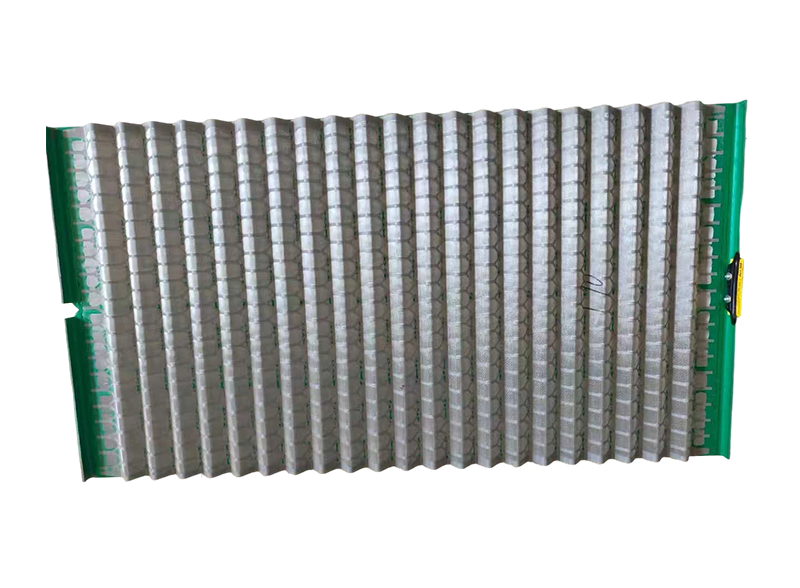
HYP Corrugated Shaker Screens are a practical choice when a shaker needs higher usable screening area, steady fluid flow, and reliable solids separation. A shale shaker screen must remove drilled cuttings while allowing drilling fluid to return to the active system. If the screen blinds too quickly, loses fluid, or wears out early, operating costs rise.
Drilling teams often compare a corrugated screen with a flat-panel screen, hook-strip screen, or replacement screen for vibrating shale shaker equipment. The right option depends on screen cut point, flow rate, deck angle, vibration settings, and the type of solids in the drilling fluid.
HYP screens use a corrugated screening surface to create more screening area within a similar panel footprint. This design can support oilfield solids control work where capacity and screen life are both important.
Screen performance also depends on the vibrating screen mesh, wire diameter, opening size, support structure, and installation quality. A screen with a suitable API designation can still perform poorly if it is not tensioned correctly or if the shaker deck is damaged.
Choosing a high-capacity corrugated screen is not only a purchase decision. It is a process that includes application review, equipment matching, testing, installation, and performance checks.
Choose HYP corrugated shaker screens when your shale shaker needs more effective screening area, stable solids removal, or better fluid handling than a standard flat screen can provide. They are especially suitable for high-flow drilling fluid, frequent screen loading, limited shaker deck space, and operations that need a reliable replacement screen for vibrating shale shaker equipment. Before ordering, confirm the shaker model, panel dimensions, API RP 13C designation, cut point, screen frame type, and expected flow rate.
A corrugated screen has a formed screening surface rather than a completely flat surface. The shape can increase the effective screening area within the same general panel size. More working area may help the screen handle greater fluid and cuttings volume.
For example, if a shaker deck has six panels and two panels become overloaded, the effective screening area drops by about 33 percent. A corrugated panel may restore usable area without changing the complete shaker frame. The actual result depends on the panel design, opening size, fluid viscosity, and shaker motion.
| Check item | Recommended data to record | Why it matters |
|---|---|---|
| Fluid flow rate | Barrels per minute or cubic meters per hour | Shows whether the screen can handle the incoming volume |
| Drilled solids loading | Estimated kilograms per hour or percent solids | Indicates the likely risk of blinding and overload |
| Screen panel count | Number of active panels and panel dimensions | Defines the available screening area |
| Mud properties | Density, viscosity, temperature, and oil or water base | Changes flow behavior and separation performance |
| Shaker motion | Vibration strength, deck angle, and operating speed | Affects solids transport and liquid recovery |
The corrugated profile creates ridges and valleys in the screening surface. This structure can provide more screening surface than a flat panel with the same outside dimensions. It can also create more paths for drilling fluid to pass through the screen.
These benefits are not automatic. A screen may lose performance if the corrugation is damaged, the panel is installed in the wrong direction, or the support frame does not match the shaker deck. Always confirm the HYP panel dimensions and mounting method before shipment.
| Feature | HYP corrugated shaker screen | Standard flat shaker screen |
|---|---|---|
| Screen surface | Formed and corrugated | Mostly flat |
| Effective screening area | Can be higher within a similar panel footprint | Usually limited to the flat panel area |
| Best use | High-flow or space-limited screening applications | General screening and simple replacement needs |
| Installation concern | Correct profile direction and support are important | Panel flatness and tension are key |
| Performance factor | Depends on profile, mesh, opening, and shaker settings | Depends on mesh, opening, and shaker settings |
The cut point is the approximate particle size that the screen is designed to separate. It is controlled by the screen opening, wire diameter, mesh arrangement, and the selected API screen designation.
A fine mesh shaker screen can remove smaller particles, but it may reduce flow capacity and increase the risk of blinding. A coarse screen normally handles more fluid, but it allows larger particles to pass through. The correct balance depends on the solids-control target.
| Application target | Typical screen range to evaluate | Main concern |
|---|---|---|
| High-volume primary separation | 20 to 84 mesh equivalent | Keep flow open and prevent rapid loading |
| General drilling fluid separation | 84 to 170 mesh equivalent | Balance fluid recovery and solids removal |
| Fine solids removal | 170 to 325 mesh equivalent | Control blinding and maintain enough flow |
These ranges are starting points, not universal specifications. Mesh number alone does not define the actual separation result. Two screens with the same nominal mesh can have different openings because they use different wire diameters and weaving patterns.
API RP 13C provides a recognized method for describing shaker screen separation and conductance. The test uses a standardized procedure and reports information such as the separation potential and conductance value. Ask for the API RP 13C designation and test record for the selected HYP screen.
The buyer should compare the following information:
Drilled cuttings can contain sand, limestone, shale, and other abrasive particles. High solids loading can damage the screen cloth and support structure. Temperature, chemical exposure, incorrect tension, and excessive vibration can also shorten screen life.
A screen should be removed when damage can affect separation or allow unprocessed solids into the next solids-control stage. Do not wait for a complete panel failure. A damaged panel can contaminate recovered drilling fluid and increase wear on downstream equipment.
Record screen life in operating hours rather than calendar days. Also record the fluid type, flow rate, mesh, deck position, and damage pattern. For example, a panel that lasts 120 operating hours on one well may last only 60 hours under a higher solids load.
| Record | Example value | Use of the record |
|---|---|---|
| Operating time | 60, 90, or 120 hours | Compare screen life between jobs |
| Flow rate | 30 to 80 liters per second | Relate wear to fluid loading |
| Screen position | Feed, middle, or discharge panel | Identify local overload |
| Failure mode | Blinding, tearing, frame damage, or wear | Select a better screen construction |
An oilfield solids control screen must protect the drilling fluid system while removing unwanted solids. The screen is often the first separation stage after the mud returns from the well. Its performance affects desanders, desilters, centrifuges, mud cleaners, pumps, and storage tanks.
For an HYP corrugated shaker screen for oil drilling, the order should include the shaker brand and model, screen panel number, dimensions, mounting style, mesh or API designation, and expected operating conditions.
A properly selected screen can help reduce the load on downstream equipment. It can also reduce the amount of useful drilling fluid lost with discharged cuttings. The result should be evaluated with measurable data, such as fluid loss, solids concentration, screen life, and gallons or cubic meters processed per hour.
A corrugated screen is useful only when it fits the shaker and remains secure during vibration. Compatibility includes more than the outside length and width. It also includes the frame, tension system, support bars, wedge blocks, fastening points, and panel orientation.
Measure the old panel in at least three places. A difference of only 2 to 3 millimeters can affect mounting on some shaker decks. Inspect the support bars before installation. A bent bar or worn wedge can cause uneven pressure and early screen failure.
Choose a standard flat screen if the shaker manual does not approve a corrugated panel, if the deck support does not match the profile, or if the operation requires a very simple low-cost replacement. Choose a pre-tensioned panel when installation speed is more important than field tension adjustment. Choose a hook-strip screen when the shaker uses hook-strip mounting and does not accept a rigid frame.
The following process helps buyers choose a replacement screen for vibrating shale shaker equipment without relying on mesh number alone.
Step 1: Identify the shaker. Record the manufacturer, model, deck size, panel count, and mounting system.
Step 2: Measure the operating conditions. Record flow rate, mud density, viscosity, temperature, and estimated solids loading.
Step 3: Define the separation target. Decide which particle size must be retained and whether fluid recovery or fine-solids removal has priority.
Step 4: Select the screen construction. Compare HYP corrugated, flat, hook-strip, and framed options.
Step 5: Confirm technical data. Check dimensions, opening, wire diameter, API RP 13C information, material, and allowable operating conditions.
Step 6: Inspect the shaker deck. Repair support bars, wedges, clamps, and damaged frame surfaces.
Step 7: Install and test. Run the shaker at a controlled flow rate and check fluid distribution, solids movement, leakage, and vibration.
Step 8: Record field results. Track screen life, discharge quality, fluid loss, and operating hours.
Need more screening capacity?
Yes: Compare HYP corrugated screens with the current flat screen.
No: Continue using the current design or compare life-cycle cost.
Does the HYP panel match the shaker deck?
Yes: Check mesh, API designation, frame, and mounting type.
No: Request a compatible design or select another screen construction.
Is fine solids removal required?
Yes: Evaluate a finer opening and confirm conductance and blinding risk.
No: Evaluate a coarser opening for higher flow capacity.
Has the screen passed inspection?
Yes: Install, test, and record performance.
No: Hold the panel and request correction or replacement.
Screen quality inspection should include measurable checks. A visual inspection alone may not find incorrect openings, uneven tension, or frame distortion.
| Inspection area | Suggested check | Acceptance focus |
|---|---|---|
| Panel dimensions | Measure length, width, and thickness at three points | Matches the approved drawing and shaker deck |
| Screen cloth | Check for broken wires, folds, holes, and loose edges | No visible defect that affects separation |
| Opening size | Use calibrated optical or image measurement equipment | Matches the ordered mesh or opening specification |
| Frame and support | Check welds, ribs, edges, and flatness | No cracks, sharp projections, or excessive distortion |
| Mounting features | Check hook, wedge, bolt, or latch dimensions | Fits the shaker without forced installation |
| Identification | Check label, batch number, mesh, and model information | Traceable to the order and inspection record |
Yuanpeng can use a documented inspection plan for each production batch. A useful plan includes dimensional checks on 100 percent of panels, visual checks on 100 percent of panels, and opening or performance checks on samples from each mesh batch. The sampling frequency should follow the buyer's quality agreement and the applicable test method.
Quantified records make screen improvement easier. Record the number of tested panels, the number of operating hours, flow rate, screen opening, failure mode, and field location. A project review can compare at least three screen variables, such as corrugation profile, wire diameter, and support layout.
For a controlled implementation, test one screen design for a minimum of 24 operating hours before making a first performance judgment. For life comparison, use at least three panels in the same deck position or compare three similar operating runs. This approach does not replace a formal qualification program, but it gives the engineering team a repeatable basis for decisions.
The lowest unit price may not produce the lowest operating cost. A screen that fails early can increase labor, downtime, drilling fluid loss, waste handling, and replacement inventory.
Use this formula:
Total screen cost per operating hour = purchase price plus installation cost plus fluid-loss cost plus disposal cost, divided by operating hours.
| Cost factor | Question to ask |
|---|---|
| Purchase price | What is the price per panel or per complete deck? |
| Installation | How many minutes and workers are needed for replacement? |
| Operating life | How many hours does the screen run before replacement? |
| Fluid loss | How much usable fluid leaves with discharged solids? |
| Downtime | What is the cost of stopping the shaker for a screen change? |
| Inventory | How many spare panels must be kept on site? |
For example, a panel that costs 20 percent more but lasts 50 percent longer may have a lower cost per operating hour. The calculation should use actual field data when available.
Many drilling teams search for when to replace shale shaker screens because replacement timing affects both safety and separation quality. Replace a screen when it is torn, permanently distorted, unable to maintain the required separation, or causing abnormal fluid loss.
Do not install a new panel on a damaged support bar. Do not tighten a panel beyond the manufacturer's recommended method. Excessive tension can deform the frame or damage the wire cloth.
Choose HYP corrugated shaker screens when you need more usable screening area, stable drilling fluid handling, or a stronger performance match for a high-flow solids-control system. They can be a good option for oil drilling, fine solids removal, and replacement screen programs when the shaker model, panel dimensions, opening size, API RP 13C data, and mounting method are confirmed. Yuanpeng buyers and engineering teams should evaluate capacity, screen life, quality inspection results, and total operating cost together. The best HYP corrugated shaker screen is the one that fits the equipment, meets the separation target, and delivers measurable performance in the field.
Related Products


