

What Mesh Options Are Available for BRANDT ALPHA Replacement Screens?
Sep. 17, 2026
Share
In drilling operations, the wrong screen can increase fluid loss, reduce solids control, and force a shaker to work below its rated capacity. BRANDT ALPHA Replacement Shaker Screens help restore separation performance when the original panels are worn, damaged, or no longer suitable for the drilling fluid. This guide explains how to select replacement screens for BRANDT ALPHA shale shaker equipment, compare mesh options, check fit, and install BRANDT ALPHA screen panels correctly. The goal is simple: achieve the required cut point without causing avoidable downtime or screen damage.
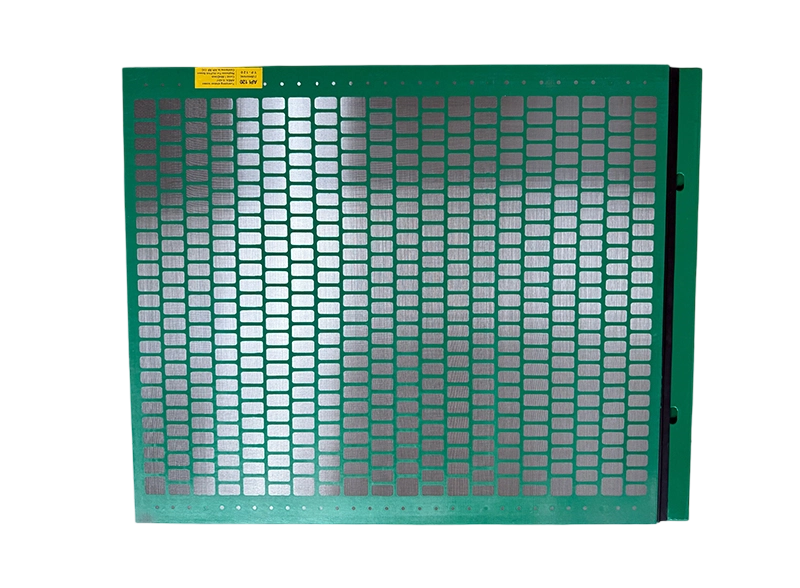
BRANDT ALPHA replacement shaker screens are removable screening panels designed to fit the deck and screen tensioning system of a BRANDT ALPHA shale shaker. The panels separate drilled solids from drilling fluid as the fluid passes across a vibrating screen surface.
In the solids-control industry, several technical terms are important:
A screen is not selected only by counting mesh openings. Two screens with the same nominal mesh can have different wire diameters, open area, conductance, and service life. For this reason, the screen specification should be checked against the drilling program and the shaker manufacturer’s requirements.
Screen panels are wear parts. They are exposed to vibration, abrasive drilled cuttings, chemical additives, pressure from the feed stream, and repeated cleaning. Over time, the screen may develop broken wires, blinding, loose tension, or permanent deformation.
Common operating problems include:
For example, if a screen has 2% of its active surface torn, the effect is not limited to the damaged area. Fluid flow can become uneven, and the feed may concentrate on the remaining usable surface. The actual impact depends on deck loading, mud rheology, and the size of the tear.
The correct mesh depends on the required separation size, drilling-fluid properties, shaker loading, and available operating capacity. Typical replacement programs may include coarse, medium, and fine screen combinations rather than one mesh across every deck.
| Screen selection | Typical purpose | Main trade-off |
|---|---|---|
| Coarse mesh | Removes larger cuttings and protects finer screens | Allows more solids to pass through |
| Medium mesh | Balances solids removal and fluid capacity | May require more frequent cleaning under heavy loading |
| Fine mesh | Improves removal of smaller solids | Can reduce flow capacity and blind faster |
| Composite or multilayer screen | Combines different opening sizes in one panel | Usually requires careful handling and correct tensioning |
Mesh selection should be based on measured operating conditions, not only on a catalog number. A fine screen may provide a smaller cut point, but it can also increase overflow, reduce liquid throughput, or blind when the mud contains high polymer content.
BRANDT ALPHA-compatible screens may be supplied in different construction styles depending on the shaker configuration and supplier design. Common options include:
Do not assume that a screen with the same length and width will fit every machine. Edge profile, hook angle, support blocks, tension rails, and panel thickness must also match.
Record the exact shaker model, serial number, deck position, and number of panels. Some systems use different screen arrangements on the front and rear sections. A supplier should receive clear photos of the old panel, including the edge connection and support surface.
Measure the panel length, width, thickness, hook-strip dimensions, and frame profile. Use millimeters or inches consistently. A difference of only a few millimeters can prevent correct seating or create a bypass path around the panel.
Check the screen label, purchase record, or manufacturer data sheet. If the label is missing, measure the wire cloth with suitable tools or compare it with a verified sample. Mesh count alone is not enough because wire diameter changes the open area.
Review the fluid density, plastic viscosity, yield point, low-gravity solids, sand content, and expected flow rate. High-viscosity fluid normally places more demand on screen conductance. A finer screen may not improve performance if the fluid cannot pass through it at the available deck angle and vibration setting.
When available, compare API RP 13C designation, conductance, non-blanked area, and separation data. These values provide a more useful comparison between products than marketing descriptions such as “high capacity” or “long life.”
Common screen wire materials include stainless steel grades selected for corrosion resistance and mechanical strength. Ask for information about wire-cloth grade, frame material, adhesive or bonding process, and inspection standards. The best material depends on the drilling fluid chemistry and abrasive loading.
Stop the shaker, isolate electrical or hydraulic energy, and follow the site lockout/tagout procedure. Wait until all movement has stopped. Remove residual drilling fluid before handling the panels.
Clean the support beams, tension rails, rubber strips, wedges, and retaining components. Look for bent rails, missing supports, cracked rubber, or accumulated solids. A new panel can fail quickly if it rests on a damaged support point.
Place the panels side by side. Check the overall dimensions, hook position, frame shape, support blocks, mesh marking, and panel orientation. Do not install a panel that requires force to enter the deck.
Follow the supplier’s orientation marks. Engage the hooks or frame edges evenly, then position the panel on the support surface. Keep hands away from pinch points during installation.
Tighten the tensioning system gradually and in the recommended sequence. Uneven tension can create wrinkles, loose edges, broken wires, and fluid bypass. The panel should be firm and supported across its active area, but it should not be distorted by excessive force.
Start the shaker without feed and listen for unusual contact noise. Then introduce drilling fluid at a low rate. Check for leakage around the edges, panel movement, abnormal vibration, and uneven fluid distribution. Increase the flow in stages while monitoring the shaker and discharge.
Excessive feed loading is a leading cause of screen blinding and premature wear. If the feed stream forms a deep pool on the deck, reduce the flow or improve distribution before changing to a finer mesh.
Some screen surfaces can be damaged when abrasive solids move across them without enough fluid support. Follow the equipment operating manual and avoid unnecessary dry operation.
Clean screens with methods approved for the screen material and frame construction. High-pressure water used too close to the cloth can damage wires or push solids deeper into the openings. Avoid striking the panel with metal tools.
Inspect panels during every scheduled maintenance period. Record the installation date, mesh, drilling interval, fluid system, and reason for removal. A simple record can show whether failure is caused by abrasion, tension, chemical attack, blinding, or incorrect fit.
A small tear can expand rapidly under vibration. Remove a panel when it has broken wires, a damaged frame, severe blinding that cannot be cleaned, or a loose edge that cannot be corrected by proper tensioning.
Performance should be verified with field measurements. Useful indicators include shaker feed rate, screen loading, discharge moisture, drilling-fluid density, low-gravity solids, screen life, and the percentage of panels removed before the planned maintenance interval.
When comparing suppliers, request a product drawing, material information, screen designation, inspection record, and compatibility statement. The documentation should identify the intended shaker model and panel type.
API RP 13C is widely used in the drilling industry to describe shaker-screen testing and classification. It helps users compare separation behavior and conductance using a common framework. However, API classification does not replace field testing. Actual performance changes with mud properties, vibration settings, deck angle, feed distribution, and solids concentration.
Useful reference sources include:
Always confirm the current revision, purchasing specification, and local site requirements before relying on a technical standard.
To reduce ordering errors, prepare the following information:
Yuanpeng can use these details to help compare compatible panel construction, mesh combinations, and replacement-screen options. Ask for a drawing or sample confirmation before production when the shaker configuration is uncertain.
Not always. A replacement screen may be manufactured to fit the same shaker dimensions and tensioning system, but the wire cloth, frame material, bonding method, mesh, and performance values can differ. Confirm compatibility and technical data before purchase.
A higher mesh number may provide smaller openings, but it can also reduce conductance and increase blinding. The best choice depends on the fluid viscosity, flow rate, solids loading, and target separation size.
Look for broken wires, visible holes, loose edges, frame cracks, wrinkles, fluid bypass, and solids appearing in the underflow that should have been removed. A light inspection from the back of the screen can reveal small tears.
Possible causes include high polymer content, excessive low-gravity solids, unsuitable mesh, poor feed distribution, low vibration, incorrect deck angle, or inadequate cleaning. Changing to a coarser screen may help, but the operating cause should be checked first.
The required number depends on screen life, delivery time, deck size, and the cost of downtime. A practical stock plan covers normal replacement demand plus an emergency reserve for at least one complete deck, subject to the drilling contractor’s maintenance policy.
Yes, Yuanpeng can discuss coarse, medium, fine, multilayer, and other compatible configurations when the required dimensions and operating conditions are provided. The final recommendation should be based on the shaker model, drilling-fluid data, and target cut point.
The next step is to inspect the current shaker panels, record the dimensions and failure condition, and review the equipment user guide before ordering. With accurate measurements and operating data, Yuanpeng can help you select BRANDT ALPHA replacement shaker screens that match the deck, drilling fluid, and solids-control target.
Related Products


