

When Should You Use Corrugated Shaker Screens Instead of Flat Screens?
Sep. 16, 2026
Share
Choosing the wrong screen can cause blinding, low capacity, short service life, and repeated downtime. Corrugated shaker screens are often the better choice when material is wet, sticky, highly variable, or difficult to separate. This guide compares corrugated screen mesh, flat woven wire screens, aggregate screening, and vibrating screen performance in simple terms. It explains when DP600 Corrugated Shaker Screens can solve common screening problems and when a flat screen is still the right option.
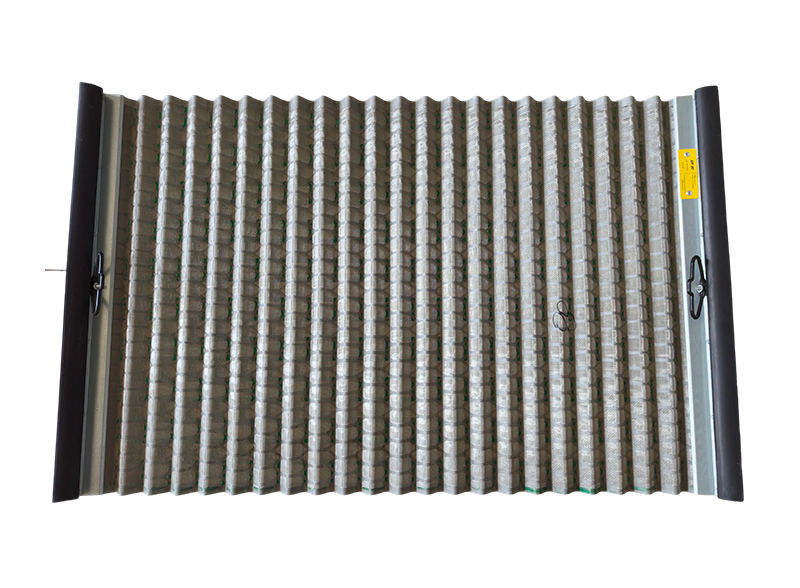
Use a corrugated shaker screen instead of a flat screen when your material contains moisture, clay, fines, sharp particles, or a wide mix of sizes. The shaped wires create more screening movement and reduce the flat contact area where particles can stick.
A flat screen is usually suitable for dry, clean, and evenly sized material. It is also a practical choice when the required opening is small, the feed is not abrasive, and the main priority is a low initial purchase price.
| Screening condition | Recommended screen | Main reason |
|---|---|---|
| Dry and clean material | Flat screen | Simple separation with lower initial cost |
| Wet or clay-coated feed | Corrugated screen | Lower risk of blinding and better particle release |
| Sharp and abrasive stone | Corrugated screen | Improved wear resistance when the correct wire and support are selected |
| High contamination from oversized particles | Corrugated screen | Better tolerance of impact and irregular feed |
| Light-duty or temporary screening | Flat screen | Lower replacement and installation cost |
If the screen stops separating material because openings are blocked, change to a design that improves particle movement. If the screen breaks because of impact or abrasion, select a stronger wire grade, support design, and screen structure. A corrugated screen may address both problems, but the final choice should match the machine, opening size, feed rate, and material type.
Moisture is one of the most common causes of poor screen performance. Fine particles can join together and form soft lumps. Clay may spread across the screen surface and cover the openings. This process is called screen blinding. Once blinding starts, the effective open area becomes smaller, even though the mesh has not changed.
Corrugated shaker screens use shaped wires that create a less uniform contact surface than flat wire mesh. The movement of the vibrating screen helps loosen some particles and keeps more openings active. This does not eliminate blinding in every application, but it can reduce the frequency and severity of the problem.
For wet aggregate, recycled construction material, compost, sand, and clay-bearing stone, a corrugated design is often worth testing before changing the entire screening machine. Yuanpeng can match DP600 corrugated shaker screens with the required opening and tensioning method for the buyer's equipment.
Screen life depends on more than wire diameter. Important factors include feed size, impact energy, material hardness, moisture, vibration amplitude, tension, support condition, and cleaning frequency. A flat screen may wear quickly when large particles hit the same area repeatedly.
A corrugated screen can distribute contact and impact across a shaped wire pattern. The structure may also provide a stronger working surface for difficult feed. DP600 steel is selected for applications where strength and wear resistance are important, but the exact life depends on the operating conditions.
| Operating factor | Effect on screen life | Recommended action |
|---|---|---|
| Large feed entering the deck | High impact and local wire damage | Add scalping or use a heavy-duty corrugated design |
| Sharp crushed rock | Fast abrasion and possible wire cutting | Use suitable DP600 wire diameter and support spacing |
| Loose or weak screen tension | Excess movement and premature fatigue | Check tension after installation and during operation |
| Blocked support rails | Uneven load and local wear | Clean and inspect the support system regularly |
DP600 is not a guarantee of a fixed number of operating hours. A screen in a dry sand plant may last much longer than one handling wet granite with large impact particles. Buyers should compare screen life under similar feed size, moisture, machine speed, and deck position.
A useful purchasing record includes installation date, screen location, feed material, operating hours, failure type, and replacement reason. This information helps a distributor select a more suitable corrugated shaker screen for the next order.
Flat screens work best when material spreads evenly across the deck. In real plants, feed often arrives in surges. Oversized stones may land in one area, while fines and wet material collect in another. Uneven loading increases wear and reduces separation accuracy.
Corrugated screens are useful when the feed is irregular because their structure can handle changing contact conditions better than a basic flat mesh. They are especially practical for quarry screening, recycled concrete, demolition waste, gravel, limestone, and mixed mineral feed.
A flat screen can lose performance when the feed layer is too deep. Material at the top cannot reach the openings, and the bottom layer may block the mesh. The result is carryover, reduced undersize recovery, and a higher risk of screen damage.
Before replacing the screen, check the feeder rate and deck angle. A correct screen cannot compensate for a feed rate that is too high for the machine. If the feed is controlled but the material remains aggressive or uneven, a corrugated design is a logical next test.
Screening accuracy is not only about the nominal opening. It also depends on open area, particle shape, vibration, material flow, and the time particles remain on the deck. A screen that begins with good separation can perform poorly when openings become blocked or wires become bent.
Corrugated shaker screens can help maintain more active openings under difficult conditions. Their movement and wire pattern may improve the release of near-size particles. This is valuable when the final product must stay within a controlled size range.
| Performance target | Flat screen risk | Corrugated screen benefit |
|---|---|---|
| Stable product size | Blocked openings increase oversize carryover | More active screening area during operation |
| Reduced cleaning stops | Sticky fines can form a surface layer | Wire movement can help release trapped particles |
| Consistent plant output | Capacity changes as the deck blinds | Performance can remain more stable in difficult feed |
Actual results should be verified with a short production trial. Record feed tons per hour, moisture level, product size, screen downtime, and the amount of material passing each deck. These numbers give a better answer than visual inspection alone.
A corrugated screen is not automatically the best choice. Flat screens are often suitable for dry, free-flowing, and low-impact material. They may also be preferred where the customer needs a familiar replacement that is easy to stock and install.
Flat woven wire mesh can provide a regular opening and predictable sizing. It is commonly used in laboratory testing, light-duty aggregate screening, dry sand, powder screening, and applications where the feed is already well controlled.
The correct comparison is total operating cost, not only purchase price. A flat screen that costs less but requires frequent cleaning and replacement may cost more over one year than a stronger corrugated alternative.
Overseas buyers and distributors should calculate four cost areas: screen purchase price, installation labor, cleaning downtime, and replacement frequency. Include lost production when the machine stops. This gives a more useful result than comparing two screen quotations line by line.
| Cost item | Question to ask | Useful measurement |
|---|---|---|
| Purchase cost | What is the price per panel or square meter? | Price per usable screening area |
| Installation | How long does replacement take? | Labor hours per change |
| Downtime | How often must the deck be cleaned? | Stopped hours per week |
| Service life | How quickly does the screen wear or break? | Operating hours per screen |
| Product quality | Does the screen hold the required size? | Percentage of material within specification |
For distributors, the best product is often the one that reduces customer complaints. A corrugated shaker screen can be a stronger value when it lowers cleaning calls, emergency shipments, and repeated replacement orders caused by premature failure.
Use the following process before ordering a replacement screen. It reduces the risk of selecting the wrong opening, wire diameter, or installation style.
Send the machine model, screen length and width, opening size, wire diameter, deck position, feed type, moisture condition, feed size, tensioning style, and current failure problem. Photos of the installed deck and damaged screen are also useful.
Yuanpeng can use these details to recommend a DP600 corrugated shaker screen for the customer's application. A clear specification is especially important for overseas orders because it reduces errors caused by different machine names and local measurement systems.
They are better for many difficult applications, but not for every application. Corrugated screens are often preferred for wet, sticky, abrasive, or irregular feed. Flat screens remain effective for dry, clean, and controlled material.
No screen can prevent blinding in all conditions. Corrugated designs can reduce the risk by improving particle movement and reducing flat contact. Moisture control, correct vibration, suitable opening size, and proper feed distribution are also important.
DP600 corrugated shaker screens can be used for many stone, aggregate, recycling, and mineral screening applications. The correct wire diameter and support layout must be selected according to impact, abrasion, feed size, and machine design.
If the product contains too much oversize or undersize, inspect the opening, wire wear, tension, and material flow. A worn opening may become larger, while blinding may make the effective opening smaller. Test samples from the feed and each product stream before changing the specification.
Sometimes, but not always. The panel dimensions, hook type, tensioning system, support rails, and deck clearance must match the vibrating screen. Confirm the installation details before ordering.
Choose a corrugated shaker screen when your main pain point is blinding, unstable capacity, uneven feed, heavy impact, or fast wear. Start with the material and operating data, then select the screen opening, wire diameter, steel grade, and installation style.
Choose a flat screen when the material is dry, clean, evenly fed, and easy to separate. It can offer simple installation and lower initial cost in light-duty conditions.
The most reliable decision comes from measured results. Compare operating hours, tons per hour, cleaning stops, product size, and replacement cost. With the correct data, DP600 corrugated shaker screens from Yuanpeng can provide a practical upgrade for demanding screening plants without changing the entire machine.
Related Products


